To determine the correct HVAC size for a Utah home, calculate your square footage and multiply it by 30 to 60 BTUs based on local climate needs and insulation quality. This HVAC system sizing guide emphasizes using a professional Manual J calculation to ensure the unit is perfectly matched to your home's layout; this prevents efficiency loss from short cycling or constant running.
Many homeowners in Juab County struggle with high energy bills and uneven temperatures despite having a relatively new system. Often, the issue is not the quality of the unit but the size of it. An oversized furnace or undersized air conditioner forces your equipment to work harder than necessary; this leads to premature wear and inconsistent comfort during our harsh Utah winters and dry summers. Precision is essential because a generic estimate based on square footage rarely accounts for the unique variables of your home. In this guide, we will break down technical metrics like BTUs and tonnage, explain why the Manual J load calculation is the industry gold standard, and explore how our local high desert climate impacts your sizing needs. You will learn how to identify the signs of an improperly sized unit and why matching your ductwork is the final step in achieving total home comfort.
Why Proper HVAC Sizing Matters for Juab County Homeowners
Investing in a new furnace or air conditioner is a major financial commitment that impacts your home life for decades. It is not merely about the upfront cost of the equipment; it is about the long-term efficiency and mechanical reliability you will experience every season. When a system is sized correctly, it operates quietly and maintains a consistent temperature across every room. Conversely, an improperly sized unit creates a cycle of frustration, characterized by uneven temperatures, high humidity, and spiked energy bills.
Our local climate in Central Utah is particularly demanding. Homeowners in Nephi, Mona, and Eureka deal with a high-desert environment where sub-zero winter nights are followed by summer afternoons that frequently hit triple digits. In these conditions, there is zero margin for error. An undersized unit will run continuously without ever reaching the set point during a July heatwave, while an oversized system will cycle on and off so rapidly that it breaks down years before its time. This HVAC system sizing guide explains how to avoid these common pitfalls. By understanding the technical requirements of your property, you can ensure that your professional climate control services result in a system that is perfectly calibrated for the Juab County climate.
Understanding the Metrics: BTUs and Tonnage Explained
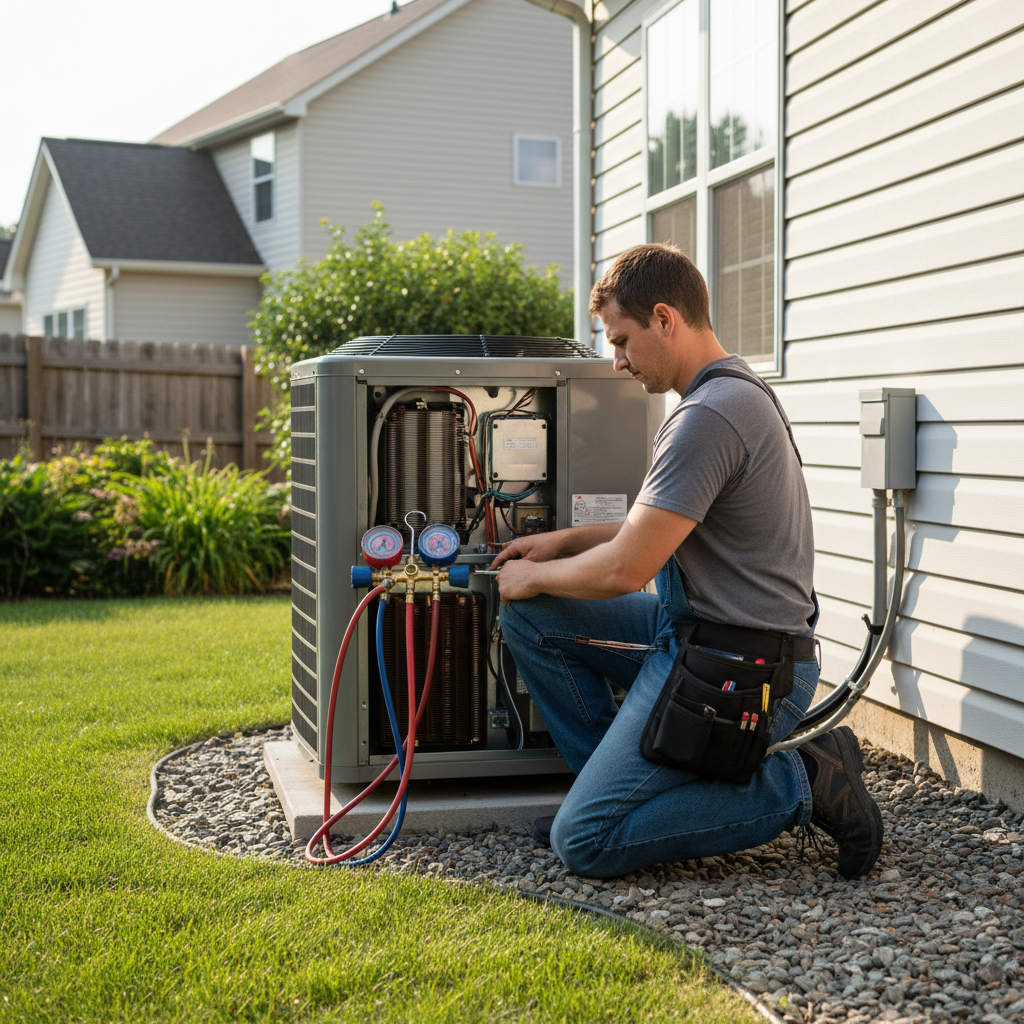
To navigate an HVAC system sizing guide effectively, you must first master the two primary units of measurement: British Thermal Units (BTUs) and Tonnage. A BTU is a precise measurement of heat energy; specifically, it is the amount of energy required to raise the temperature of one pound of water by one degree Fahrenheit. In the context of cooling, we use tonnage to describe a system's capacity. One ton of air conditioning capacity equals 12,000 BTUs of heat removal per hour.
Think of tonnage as the horsepower of your cooling system. Historically, this term referred to the cooling power provided by a 2,000 pound block of ice melting over 24 hours. Today, it tells us how much heat the refrigerant can pull out of your home. For a homeowner in Nephi or Mona, these numbers are more than just technical specs; they dictate your monthly utility costs. If a system is rated for three tons but cannot efficiently move heat against the high-desert sun, it will run longer and consume significantly more kilowatt-hours.
Elevation also plays a subtle but critical role in these calculations. Because Juab County sits at a higher altitude, the air is less dense than at sea level. Thinner air carries less heat per cubic foot, meaning a system may need to move a higher volume of air to achieve the same BTU transfer. When providing professional climate control services, we account for this altitude derating factor. Ignoring air density can lead to a system that looks correct on paper but fails to keep up during a scorching July afternoon, ultimately leading to higher energy bills and premature equipment wear. Understanding these metrics ensures that your investment provides the cooling capacity you actually need for our specific geography.
The Danger of the Rule of Thumb: Why Square Footage Is Not Enough
Many homeowners begin their search for a new unit by asking a specific question: "What size air conditioner do I need for a 2,000 sq ft house?" While it is a logical starting point, relying on a generic rule of thumb, such as one ton of cooling for every 500 to 600 square feet, is often a recipe for mechanical failure. This simplified calculation ignores the unique architectural and environmental factors that determine how much energy is actually required to keep your living space comfortable.
In Juab County, two homes with the exact same 2,000 square foot floor plan might require vastly different equipment. Consider the impact of window orientation. A home with large, south-facing windows in Nephi will experience significant solar heat gain throughout the afternoon, requiring a more robust cooling capacity than a shaded home of the same size. Furthermore, square footage only measures floor area, not total air volume. A living room with 20-foot vaulted ceilings contains significantly more air to condition than a room with standard 8-foot ceilings, even if the footprint is the same.
Insulation quality and R-values also play a decisive role. An older home in Eureka with original fiberglass batts will lose conditioned air much faster than a modern build in Mona featuring high-efficiency spray foam and low-E double-pane windows. When providing professional climate control services, we must account for these variables to ensure the system is not overtaxed. Relying on an outdated HVAC system sizing guide shortcut could leave you with a unit that is physically incapable of maintaining temperature during a triple-digit July day or one that is so oversized it cycles on and off constantly, wearing out its components prematurely. Achieving true efficiency requires looking past the floor plan and analyzing how the entire building envelope interacts with the Utah climate.
The Gold Standard: What Is a Manual J Load Calculation?
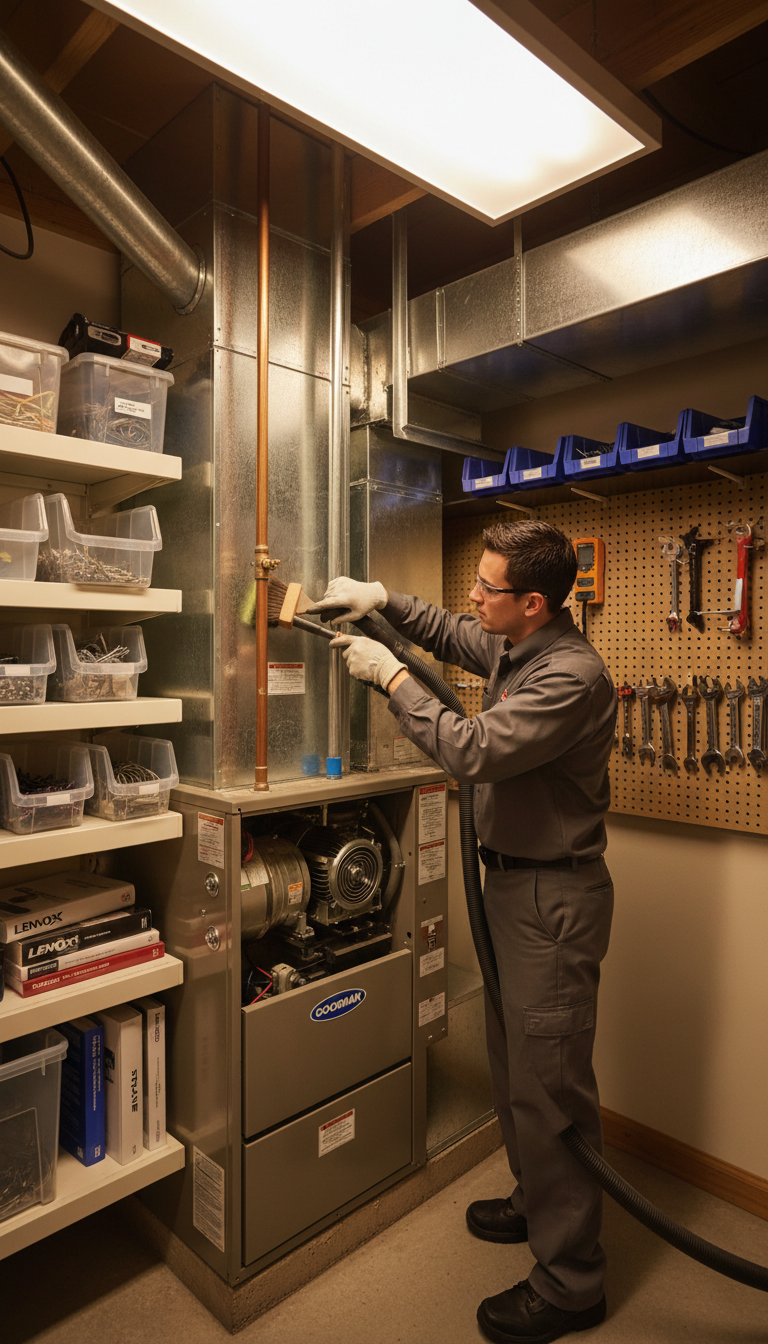
To move beyond rough estimates, professional contractors utilize the Manual J load calculation. Developed by the Air Conditioning Contractors of America (ACCA), this rigorous protocol determines exactly how much heat a home gains in the summer and loses in the winter. At Juab HVAC, we consider this the only reliable method for selecting equipment because it treats the house as a complete thermal system rather than just a set of dimensions on a blueprint.
A true Manual J calculation integrates dozens of data points specific to your property. We input local climate data for Juab County to account for our specific high-desert temperature swings. We also analyze the home’s orientation to the sun, the R-value of insulation in your walls and attic, and the specific U-values and solar heat gain coefficients of your windows. Even internal factors, such as the number of regular occupants and the heat generated by high-end kitchen appliances, are factored into the final tonnage requirement.
By utilizing these professional climate control services, we eliminate the guesswork that often leads to mechanical issues. This precision ensures that your furnace and air conditioner are perfectly matched to your home's unique envelope. Following this HVAC system sizing guide methodology allows us to guarantee that your system will maintain peak efficiency and lower operational costs, even when the Utah weather is at its most volatile. This data-driven approach is the difference between a system that simply runs and one that provides engineered comfort.
General Estimates: Sizing Guide by Square Footage
While a precise Manual J calculation is the definitive tool for performance, general estimates help set expectations for your budget and utility requirements. Providing professional climate control services across Nephi and Mona has shown us that most Utah homes fall into predictable tonnage ranges, though local variables always dictate the final choice.
Total Square Footage | Estimated AC Tonnage | Estimated Heating (BTUs) |
|---|---|---|
1,200 sq. ft. | 2.0 to 2.5 Tons | 40,000 - 60,000 |
1,500 sq. ft. | 2.5 to 3.0 Tons | 60,000 - 80,000 |
2,000 sq. ft. | 3.0 to 3.5 Tons | 80,000 - 100,000 |
2,500 sq. ft. | 4.0 Tons | 100,000 - 120,000 |
3,000 sq. ft. | 4.0 to 5.0 Tons | 120,000 - 140,000 |
These ranges assume standard insulation and 8 foot ceilings. In Juab County, we frequently encounter homes that deviate from these averages. For example, a 2,500 square foot home in Nephi with vaulted ceilings and large west facing windows often requires a full 5 ton unit to combat the high desert solar load. Conversely, a new build in Mona featuring high R-value spray foam might stay perfectly comfortable with a smaller, more efficient 3 ton system.
Using this HVAC system sizing guide helps narrow down your options, but it cannot replace a physical inspection. Sizing a system solely on square footage often leads to homeowners purchasing equipment that is either too weak for our sub-zero winters or too powerful for effective dehumidification in the summer. To get an exact match for your floor plan, you can contact our team for a detailed site evaluation.
The Utah Climate Factor: High Desert Sizing Challenges
Juab County sits in a high desert environment, which presents specific challenges for climate control. The extremely low humidity here changes how we calculate cooling needs. While some properties use evaporative cooling, refrigerant-based systems are the standard for professional climate control services because they provide consistent relief during triple-digit days. In a dry climate, the focus shifts toward sensible cooling, which is the lowering of actual air temperature, rather than latent cooling used for dehumidification.
Winter requirements are even more rigorous. Juab County experiences intense cold snaps that demand furnaces with high AFUE (Annual Fuel Utilization Efficiency) ratings and precisely calculated BTU outputs. An essential part of any local HVAC system sizing guide is accounting for peak loads. This means our technicians size your equipment for the most extreme weather events of the year. If a system is only sized for the average Utah temperature, it will likely fail to keep your home warm when the thermometer drops below zero. Designing for these peaks ensures your system remains reliable when the local climate is at its most demanding.
Signs Your Current HVAC System Is the Wrong Size
Designing for peak loads in the high desert is essential, but many existing systems in Nephi and Mona fail this test. Recognizing the physical symptoms of an incorrectly sized unit is the first step in using this HVAC system sizing guide to improve your home comfort.
Oversized systems often suffer from short cycling. This occurs when a unit is so powerful that it hits the thermostat target within minutes and shuts down prematurely. Because the system does not run long enough to properly circulate air through every room, you are left with hot and cold spots. Furthermore, rapid starting and stopping puts immense mechanical strain on the compressor and motor, which leads to frequent repairs and premature equipment failure.
Conversely, an undersized system will run constantly without ever reaching the desired temperature. In Utah, we often reference the 20 degree rule as a diagnostic benchmark. If your air conditioner cannot keep the indoor environment at least 20 degrees cooler than the outdoor temperature during a scorching summer afternoon, it is likely undersized for the home's actual cooling load. Constant operation leads to astronomical utility bills and a drastically shortened equipment lifespan. If you notice these performance gaps, you should contact our team for professional climate control services to determine if your equipment is a true match for your property.
Don't Forget the Ductwork: Airflow and System Matching
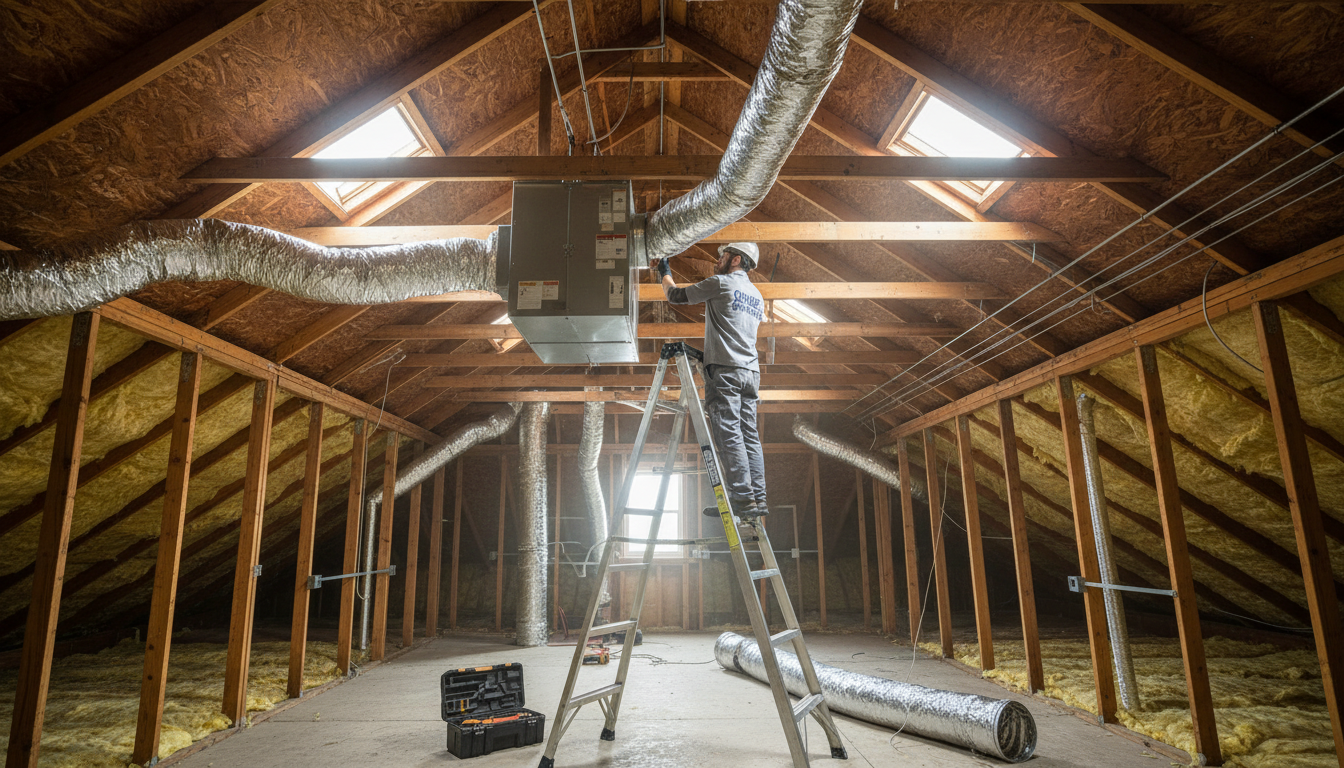
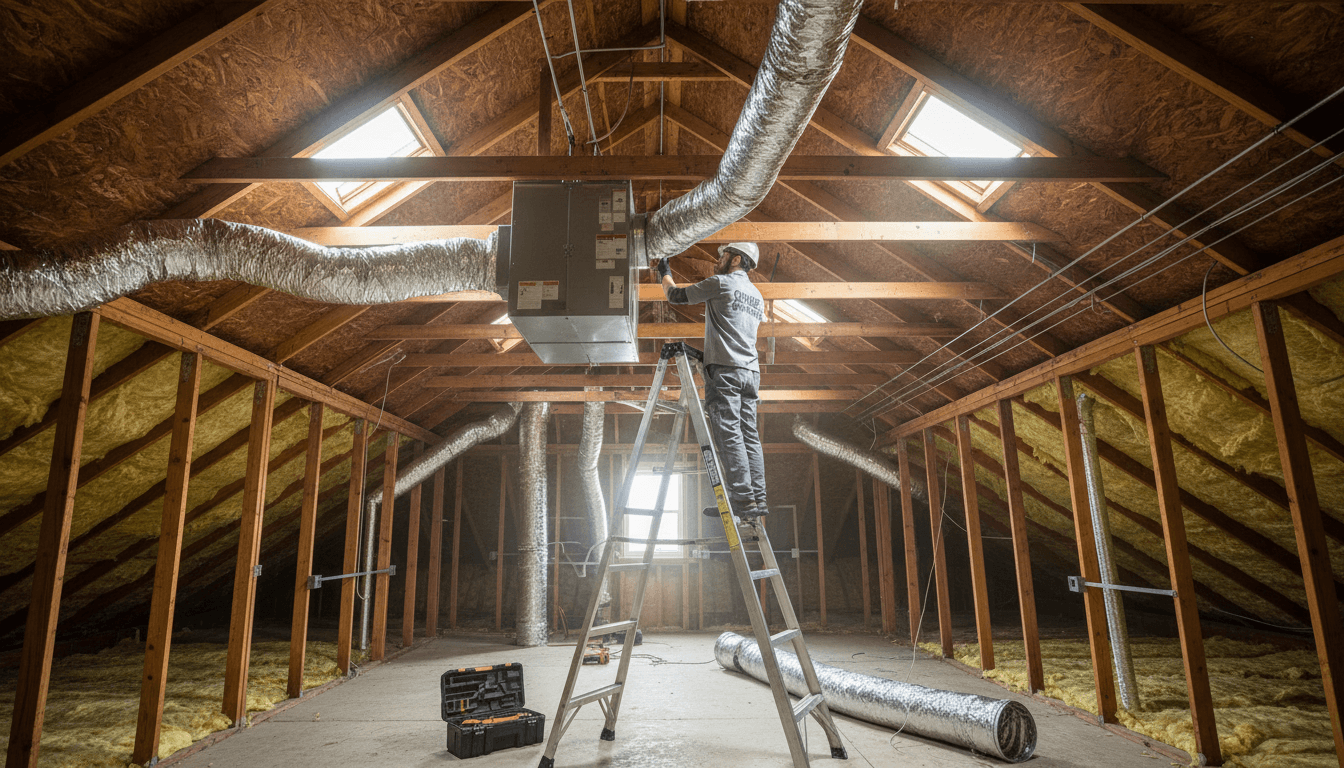
Identifying the correct equipment tonnage is only half the battle. If your home's ductwork is undersized, even the highest-efficiency furnace or air conditioner will struggle to perform. For instance, installing a 5-ton unit in a home with ducts designed for 3 tons creates excessive static pressure. This mismatch forces the blower motor to work harder, leading to increased noise, poor temperature distribution, and eventual mechanical failure.
Airflow is the lifeblood of your professional climate control services. During a new installation, our technicians evaluate the integrity and capacity of your existing ventilation. We often find leaky, restricted, or poorly routed ducts that negate the benefits of a new HVAC system sizing guide recommendation. Juab HVAC specializes in custom ductwork solutions to ensure the delivery system perfectly matches the production system. By verifying that your vents can handle the necessary cubic feet per minute (CFM) of air, we protect your investment and ensure every room in your home receives the conditioned air it needs. Contact our team to evaluate your home's infrastructure before your next upgrade.
Selecting the ideal HVAC system size ensures your Utah home stays comfortable and energy efficient throughout the changing seasons. Getting the math right is a complex process, but it is the most important step for long-term performance. If you want expert help navigating these calculations or evaluating your current setup, feel free to look through our Services. Our team focuses on providing the guidance you need to keep your home running smoothly all year long.