An AC running but not cooling is often caused by a dirty air filter, incorrect thermostat settings, or a blocked outdoor condenser coil. Other potential issues include frozen evaporator coils or low refrigerant levels; these problems typically require a professional inspection to fix. Regular maintenance, such as changing filters every one to three months and clearing debris from the outdoor unit, can help ensure your system blows cold air throughout the summer.
There is nothing more frustrating than the sound of a humming air conditioner paired with a steady stream of lukewarm air. For Juab County homeowners, this scenario often signals a system under significant stress during the peak of a high desert summer. When your AC runs without cooling, it leads to wasted energy, rising utility costs, and potential long term damage to your equipment. Understanding whether the fix is a simple DIY task or requires a professional technician is essential for maintaining your indoor comfort. In this troubleshooting guide, our experts break down the most common culprits, from frozen evaporator coils to restricted airflow. You will learn how to apply the 20 degree rule to measure efficiency, how to inspect your outdoor condenser, and how to determine if your unit has reached the end of its functional lifespan.
The Most Common Culprits for an AC Running Without Cooling
Few things are more frustrating during a Utah heatwave than realizing your home is getting warmer despite the air conditioner being active. You can hear the hum of the unit and feel air moving through the vents, but the temperature continues to climb. When you encounter an AC running but not cooling, it is important to distinguish between the two separate processes happening inside your system.
Your air conditioner is essentially two machines in one. The indoor blower fan is responsible for moving air through your ductwork, while the refrigeration cycle, powered by the outdoor compressor, is responsible for actually removing heat from that air. If the fan is spinning but the compressor is not engaging or the heat exchange is blocked, you are simply circulating room temperature air.
The most common culprits for this failure include: - Heavily clogged air filters that restrict airflow. - Incorrect thermostat settings, such as the fan being set to "On" rather than "Auto." - A blocked outdoor condenser unit, often caused by Juab County dust or cottonwood seeds. - Frozen evaporator coils that prevent heat transfer.
Understanding these mechanical basics is the first step in diagnosing why your system is failing to perform. Before you contact Juab HVAC for an emergency repair, identifying whether the issue is a simple airflow restriction or a failure in the cooling cycle can save you significant time and discomfort.
Step 1: The Zero Cost Checklist for Juab Homeowners
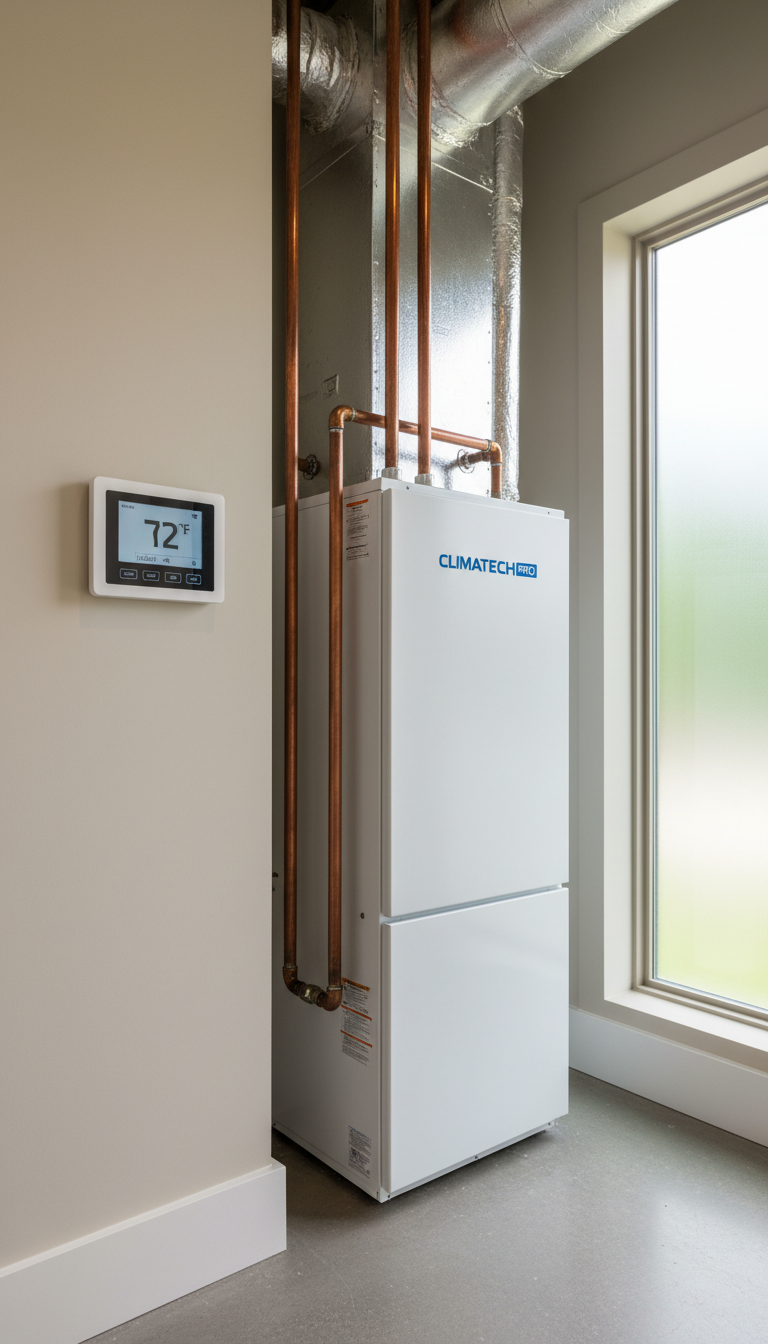
Before you call for professional residential and commercial climate control services, start with a systematic walk through of your home. You can resolve several common issues in minutes without a single tool or a service fee.
First, examine your thermostat settings. It sounds elementary, but thermostats can be bumped or accidentally switched to "Heat" or "Off" during cleaning. More importantly, check the fan setting. If the fan is set to "On," the indoor blower motor runs continuously, regardless of whether the outdoor cooling unit is active. This results in room temperature air blowing through your vents during the periods between cooling cycles. Switch the fan setting to "Auto" so the blower only moves air when the system is actively chilling it. If you feel warm air coming from the vents while the thermostat is set to 72 degrees, this simple toggle is often the fix.
Second, inspect your air filter. In Juab County, our environment is particularly hard on filtration systems. Homes near Nephi or Levan frequently deal with high levels of wind blown sediment and field dust from nearby agricultural activity. When a filter becomes packed with debris, it chokes the airflow. The system might be "running," but if the air cannot pass through the filter and over the evaporator coils effectively, the air coming out of your registers will feel weak and warm. A severely clogged filter is the most frequent reason for an AC running but not cooling. If the filter looks grey, fuzzy, or you cannot see light through it when holding it up to a window, replace it immediately. A fresh filter is the cheapest insurance policy against a mid summer system failure.
The 20 Degree Rule: Is Your AC Actually Working?
Sometimes the AC running but not cooling isn't a mechanical failure, but a limitation of physics. Air conditioning systems are generally designed to achieve a 15 to 20 degree temperature drop from the ambient air they are processing. This is known as the 20 degree rule. During a mid July afternoon in Juab County where outdoor temperatures can easily exceed 100 degrees, your system might struggle to pull the indoor temperature below 80 degrees. It is not necessarily broken; it is simply at its maximum heat removal capacity relative to the extreme Utah heat.
To determine if your unit is performing within its design limits, you can perform a simple temperature split test. You will need a basic digital thermometer for this task. First, measure the temperature of the air being sucked into the system at the large return air grate. Next, measure the temperature of the air blowing out of a supply vent closest to the indoor unit. For a healthy system, the air coming out should be 16 to 22 degrees cooler than the air going in. If you measure 78 degrees at the return and 60 degrees at the supply, your refrigeration cycle is functioning perfectly. However, if the split is only 5 or 10 degrees, you have a legitimate performance issue that requires a professional diagnostic.
Step 2: Inspecting the Outdoor Condenser Unit
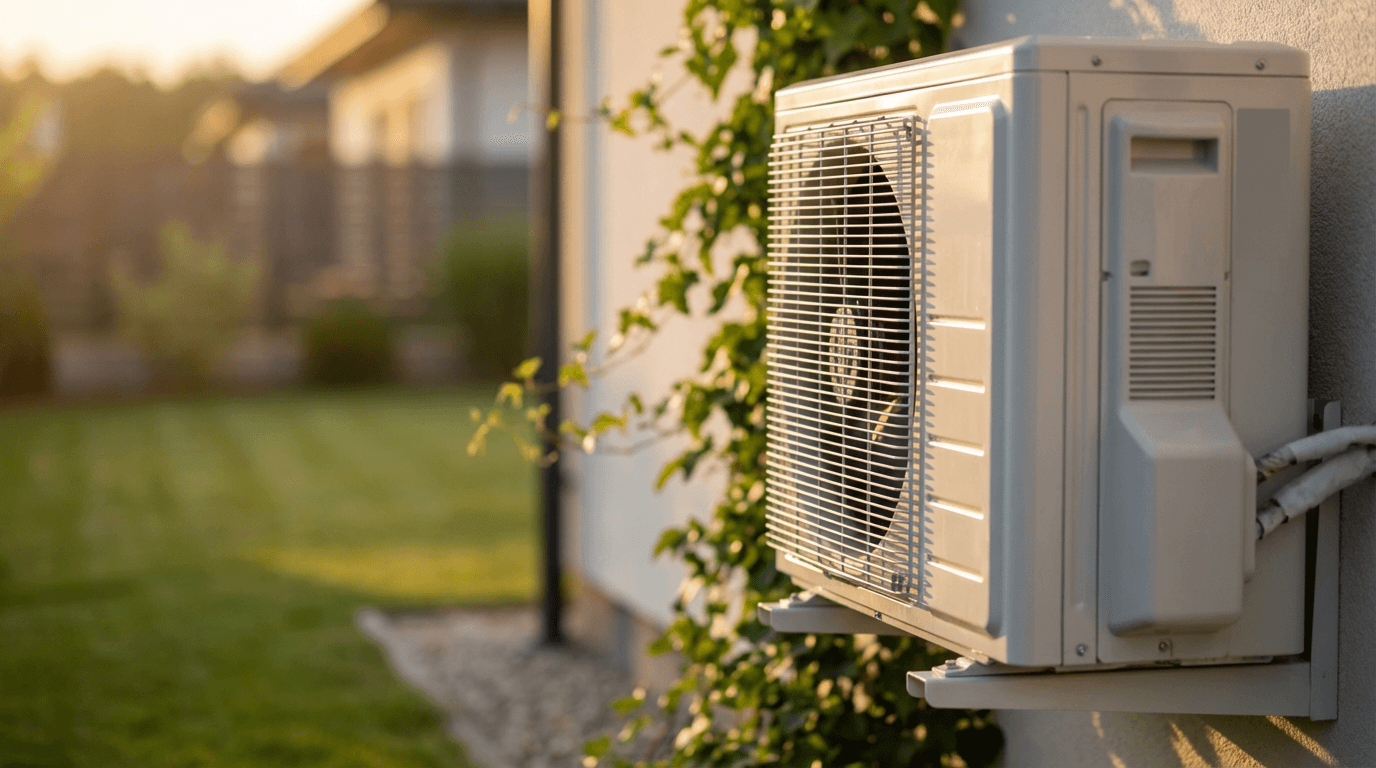
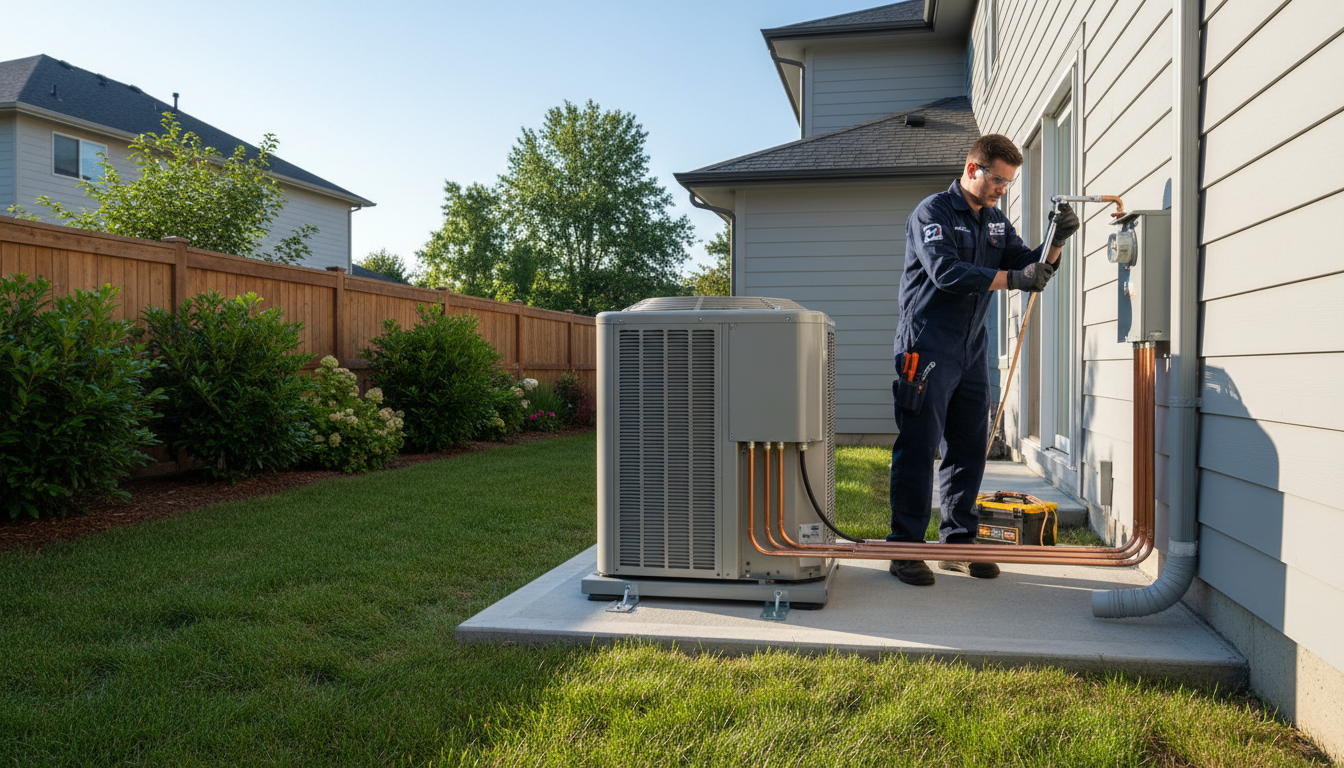
If your temperature split test indicates the system is failing to drop the air temperature significantly, the next logical stop is the outdoor condenser unit. This metal cabinet serves as the radiator of your cooling system, responsible for rejecting the heat collected from inside your home. In Juab County, we deal with specific environmental hazards that can quickly lead to an AC running but not cooling. Specifically, cottonwood seeds and heavy field dust are the primary enemies of local HVAC systems.
During the late spring and early summer, cottonwood trees release fluff that acts like a vacuum filter for your outdoor unit. When this fluff combines with fine sediment blown off agricultural fields in Nephi or Mona, it creates a thick, felt like layer known as blanketing. This debris acts as a thermal insulator. Because the unit cannot release heat through a blanket of dust and seeds, the refrigerant remains hot, and the indoor air stays warm. The system is mechanically active, but the physics of heat exchange have been compromised.
Inspect the exterior fins for this visible buildup. You should also ensure there is at least a two foot clearance around the entire perimeter of the unit. We often find that tall weeds, encroaching shrubs, or even stored patio furniture can restrict the necessary airflow. If the unit is crowded or the coils are coated in grime, the compressor must work significantly harder to achieve minimal cooling, which leads to premature wear. Maintaining this clear zone and ensuring the coils are free of debris are essential steps before seeking professional residential and commercial climate control services.
Why Your AC Might Be Frozen (Even in a Utah Summer)
It sounds like a contradiction to find a block of ice inside your indoor cabinet when it is 95 degrees in Nephi. However, frozen evaporator coils are a common reason for an AC running but not cooling. This occurs when the refrigerant inside the coils drops below freezing. If there is not enough warm air passing over those coils to transfer heat, the humidity in the air flashes into ice. Once a thin layer of frost forms, it acts as an insulator, quickly building into a thick ice block that completely prevents air from reaching your living spaces.
If you notice ice on the copper refrigerant lines or see water pooling around your indoor air handler, you must turn the system off at the thermostat immediately. Homeowners frequently ask, "Should I turn off AC if it's not cooling?" The answer is a definitive yes if you suspect a freeze. Running a frozen system puts immense liquid slugging risk on the compressor, which can lead to a total motor burnout. Turning the system off allows the ice to melt and protects the mechanical integrity of the unit.
The two primary drivers of this issue are restricted airflow and low refrigerant levels. If your air filter is severely clogged, the lack of warm air allows the coil temperature to plummet. Alternatively, a leak in the system lowers the internal pressure. Because lower pressure results in lower temperatures, the coil eventually drops below 32 degrees. Since recharging a system requires specialized tools and EPA certification, this is a critical time to contact Juab HVAC for an emergency repair to identify the leak and restore proper cooling.
Advanced Troubleshooting: When the Issue Is Electrical or Mechanical
If the airflow is clear and the coils are thawed but you still have an AC running but not cooling, the problem likely lies within the electrical components of the outdoor cabinet. One common safety feature homeowners encounter is the three minute rule. Modern digital thermostats and control boards include short cycle protection. This delay prevents the compressor from restarting immediately after a power flicker or a quick manual adjustment at the wall, protecting the motor from high pressure damage. If you just turned the system off and back on, wait five minutes before assuming there is a mechanical failure.
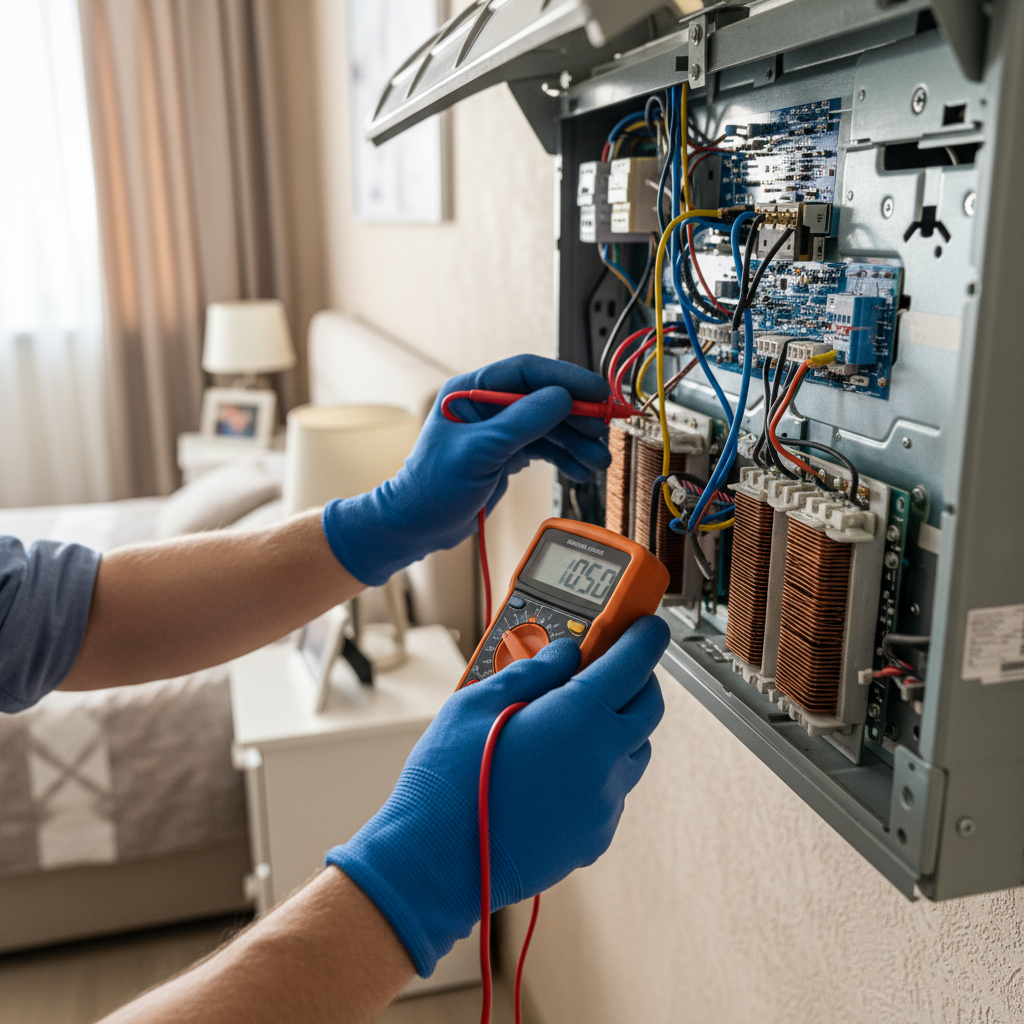
However, if the outdoor fan is spinning but you do not hear the distinct, deep hum of the compressor, you are likely dealing with a failed start capacitor. This component acts as a temporary battery to provide the high voltage jolt needed to start the compressor motor. Capacitors in Juab County frequently fail due to extreme summer heat and power surges. If the capacitor is dead, the compressor cannot engage, resulting in air that never gets cold. Because these components involve high voltage electricity, you should contact Juab HVAC for an emergency repair rather than attempting a DIY replacement. A failed compressor, which is the mechanical heart of your system, presents similar symptoms but requires an intensive diagnostic to determine if the unit can be saved.
The 5000 Rule for AC: Repair or Replace?
When an AC running but not cooling results in a high repair estimate, Juab County homeowners must decide between a temporary fix or a long term solution. We recommend applying the 5000 Rule. Multiply the age of your air conditioner by the quoted repair cost; if the total exceeds $5,000, a replacement is typically the more responsible investment. For instance, spending $600 to repair a 10 year old unit yields 6,000, signaling that your money is better spent on new equipment.
This math is particularly critical if your older system relies on R-22 refrigerant. As this fluid is phased out, its cost has surged, often making simple recharges prohibitively expensive. In the harsh Utah climate, transitioning to a modern high efficiency model provides better dehumidification and lower energy bills than a limping, older unit. If your calculation suggests it is time to upgrade, you can contact Juab HVAC for an emergency repair diagnostic or explore professional residential and commercial climate control services to find a system built for our local environment.